01
Use clear, gentle words
Children need the truth in language they can understand. Say that the pet has died and that their body has stopped working. Euphemisms such as “gone to sleep” can be confusing or frightening, especially for younger children.
You can keep the explanation short and return to it as questions come up. There is no need to explain everything in one conversation. A child may want to know where the pet is, whether they were in pain, what happens next, or whether another person or animal might die. Answer the question they asked, then check what they understood.
02
Make space for different kinds of grief
Adults sometimes expect children to grieve in a steady, visible way. In reality, a child may want to talk at bedtime, ask a practical question during breakfast, or show their feelings through drawing and play. Follow the opening they give you rather than asking them to perform sadness.
It is okay to share your own feelings in a contained way: “I feel sad because I loved them too.” Try to keep the child from feeling responsible for comforting you. Let them know that trusted adults are looking after the grown-up feelings.
- Check in gently instead of asking for a big conversation.
- Keep answers honest and short enough to understand.
- Offer closeness without requiring a hug or a particular reaction.
03
Let their age and questions lead
A child may ask the same question many times, change the subject, play, cry, or seem unaffected. These responses can all be part of how they make sense of a loss. Answer simply, then give them room to return to the conversation.
For younger children, use short concrete sentences and repeat the explanation when they ask. For primary-school children, answer questions about what happens to the body and reassure them that it was not their fault. Teenagers may want privacy, practical information or time with friends; check in without forcing a conversation.
Children often move in and out of grief quickly. They may cry and then ask for a snack, or laugh at a memory a few minutes later. This is not a sign that they did not care. Play and routine can be part of how they recover their sense of safety.
- Ask what they think happened.
- Reassure them that the death was not their fault.
- Keep routines where possible.
- Tell them it is okay to remember, laugh and feel sad at different times.
04
Make a shared memory
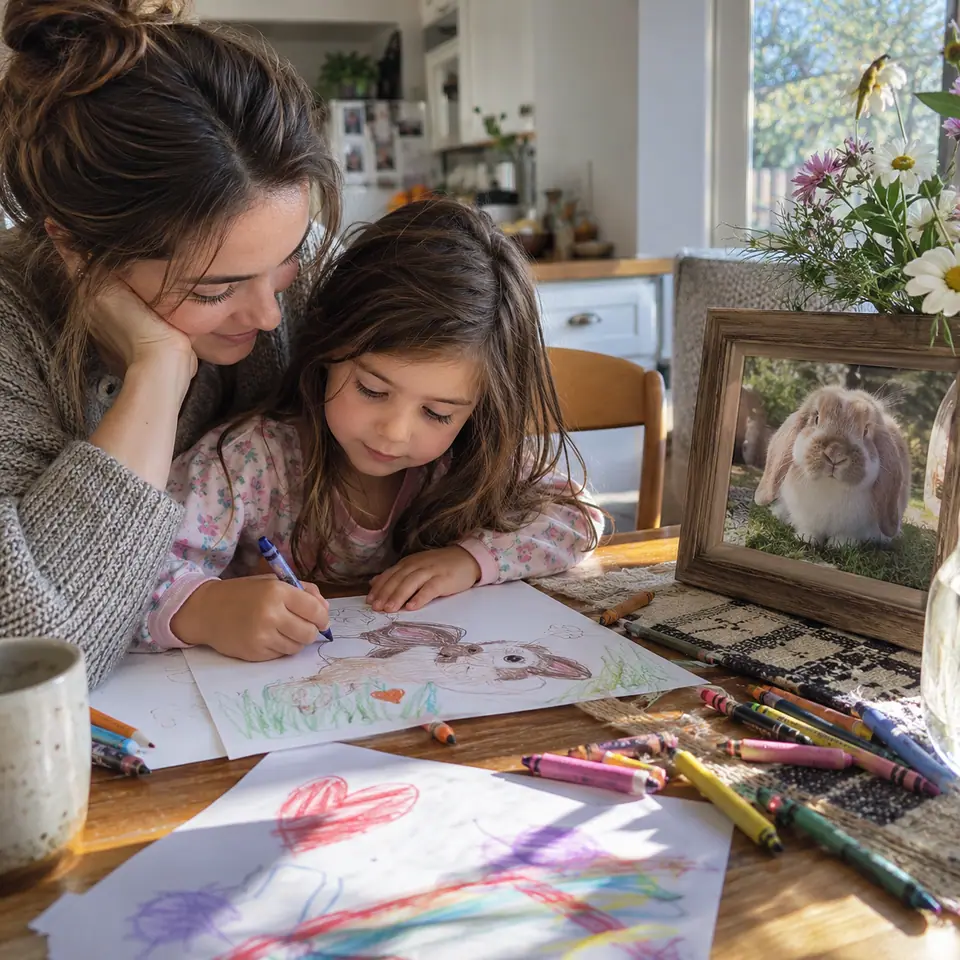
A drawing, a small story, a photo or a place to leave a Light can help children feel that the relationship still has somewhere to go. Let them decide what they want to share and what should stay with the family.
Give them choices rather than a required activity. They might draw the pet, choose a favourite photo, tell a funny story, help plant a flower, or do nothing for now. If you create a Heaven together, explain which parts are private and let the child help decide what feels comfortable to share.
Watch for longer-lasting changes such as persistent fear, withdrawal, sleep problems or difficulty functioning at school. A trusted health professional can help you decide what support would be useful.
05
A gentle check-in later
Children may understand the loss differently as they grow. A question months later does not mean you explained it badly; it may mean they have reached a new part of the story. Keep the door open without turning every anniversary into a serious conversation.
You can return to a drawing, add a new memory, or simply say their pet’s name. The goal is not to keep grief active. It is to show that remembering is allowed and that they do not have to carry confusing feelings alone.
- Ask what they remember now.
- Correct misunderstandings kindly.
- Follow their lead if they want to stop talking.
When you are ready, create a free Heaven for their photos, memories and the people who love them.
Create their Heaven — free